

Support shaping the future of circular economy skills in Mauritius
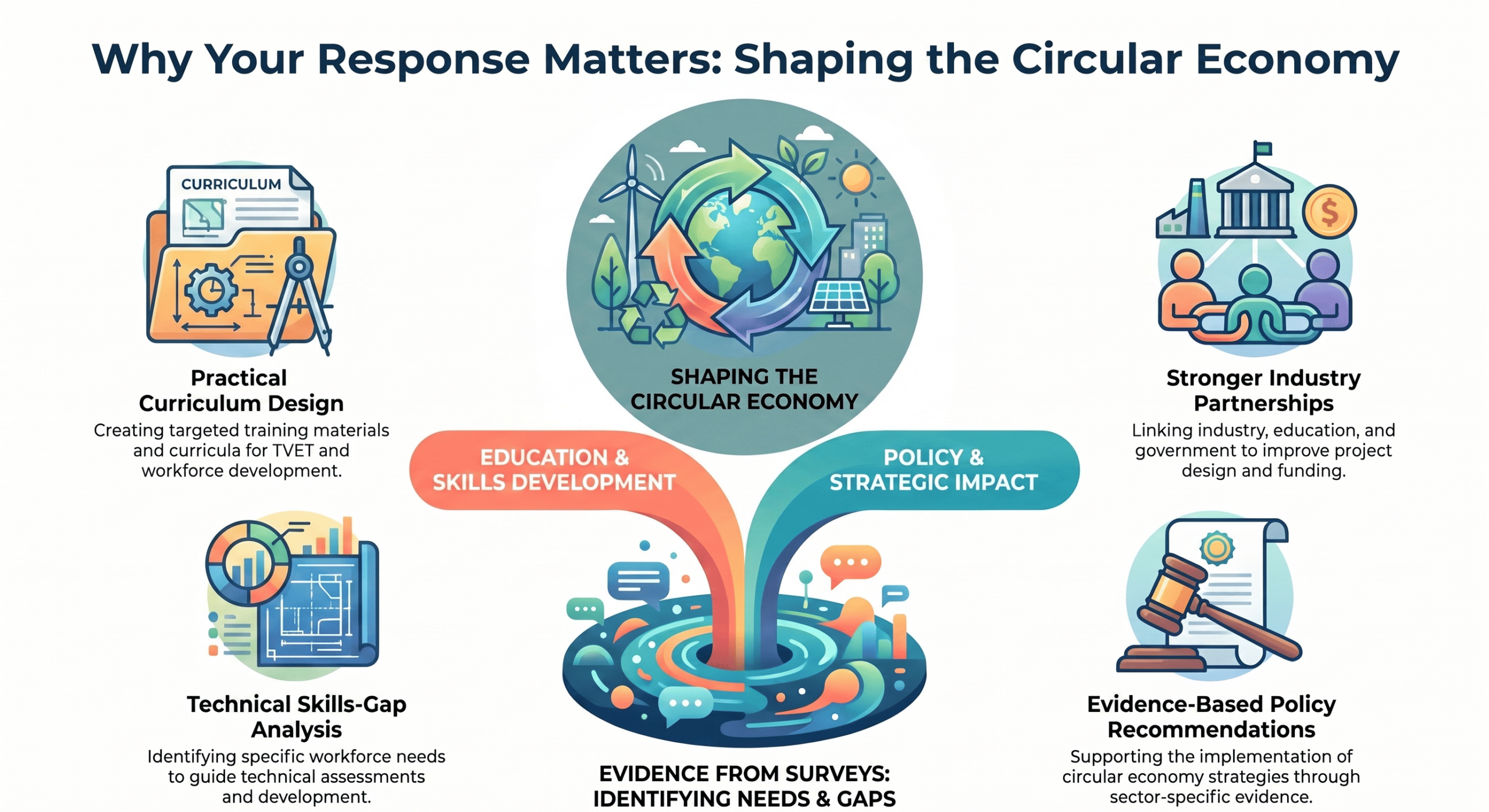
Social Sphere Innovation is supporting the International Skills Partnership Mauritius project by gathering evidence from employers, educators, policymakers, public bodies, industry operators, social enterprises and community stakeholders.
This project focuses on strengthening circular economy skills across Mauritius’ mobility, logistics, waste management, agri-food, built environment, tourism, public procurement and repair sectors. The evidence gathered through these surveys will help inform future training, technical and vocational education, policy development, stakeholder engagement and practical circular economy implementation.
Your input will help us understand current practice, skills needs, operational barriers, infrastructure gaps and opportunities for circular innovation across Mauritius.
Scroll down further to complete the stakeholder survey most relevant for you
Available surveys
1. Industrial Waste Recovery and Logistics
This survey explores how industrial waste is currently handled, recovered, transported, reused or recycled. It is relevant to manufacturers, logistics operators, waste handlers, recycling firms, industrial estates, technical institutions and policy stakeholders.
2. Forward and Reverse Logistics Optimisation
This survey focuses on the movement of goods, materials, waste streams and reusable resources through forward and reverse logistics systems. It is relevant to transport operators, logistics firms, retailers, distributors, repair networks, waste-management actors and circular economy planners.
3. Agri-Food Value Chain Circularity and Nutrient Recovery
This survey examines circularity across the agri-food value chain, including food waste reduction, nutrient recovery, organic residues, composting, reuse, redistribution and opportunities for more sustainable production and consumption systems.
4. Built Environment Circularity and Digital Material Tracking
This survey looks at construction, demolition, building materials, reuse, repair, refurbishment, material passports and digital tracking systems. It is relevant to construction firms, architects, engineers, developers, planners, public authorities, training providers and circular building specialists.
5. Consumer Goods, Value Chain Circularity & Social Enterprise
This survey explores the role of repair, reuse, refurbishment and social enterprise in extending the life of consumer goods. It is relevant to repair businesses, community organisations, technical trainers, social enterprises, retailers, makerspaces and circular economy entrepreneurs.
6. Public Procurement Readiness for Circular Systems
This survey assesses how prepared Mauritius’ public procurement bodies are to implement circular economy principles by evaluating current practices, compliance, and workforce capabilities. The findings will identify key gaps to inform future training, capacity building, and procurement reform.
7. Circular Tourism and Sustainable Hospitality Framework
This survey assesses the readiness of Mauritius’ tourism and hospitality sector to adopt circular economy practices by evaluating sustainable sourcing, waste management, asset management, and workforce capabilities. The findings will identify priority skills and operational gaps to support targeted training, capacity building, and implementation of the National Circular Economy Roadmap.
